

S1 E9: Janet Reno
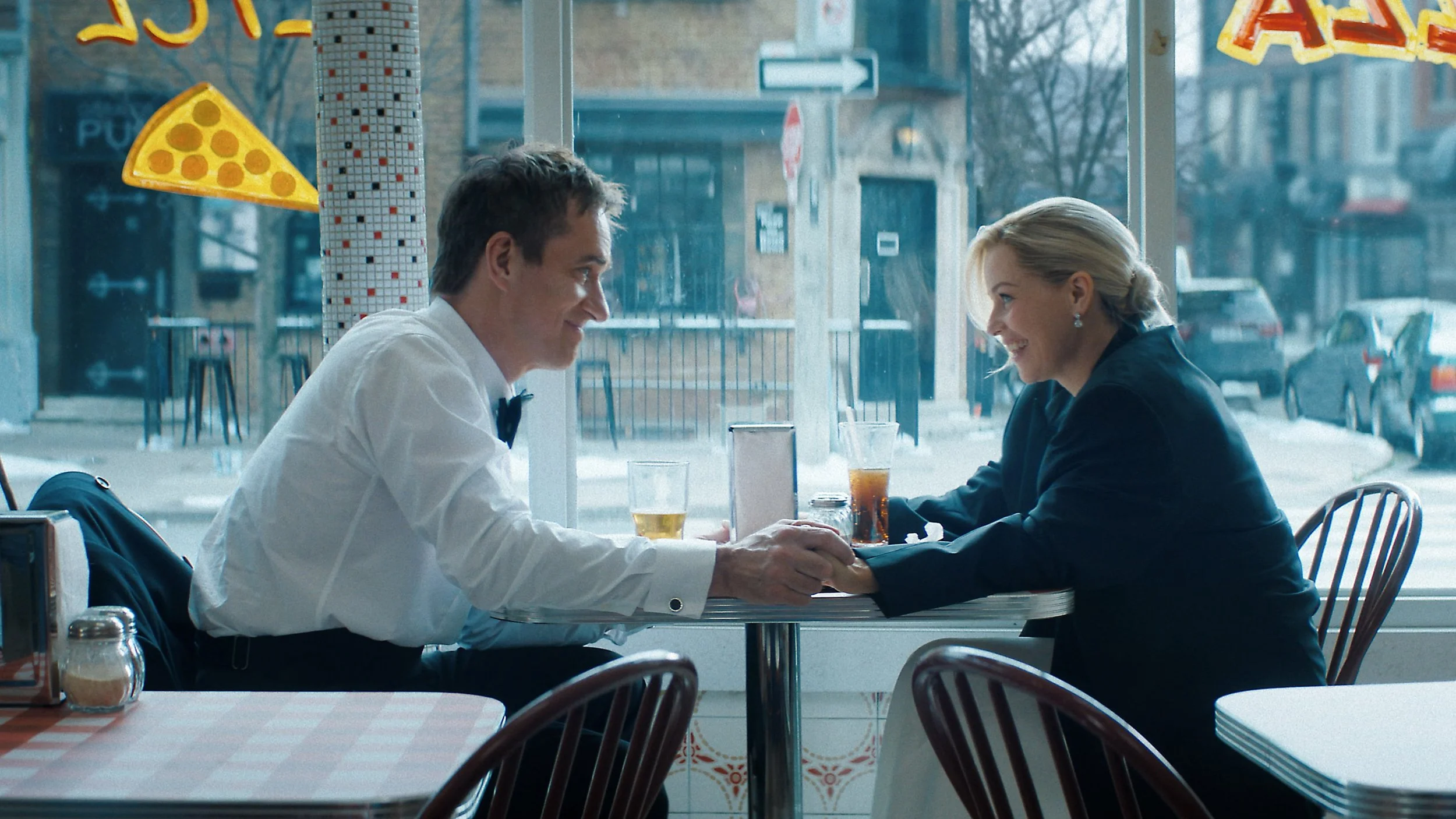
The Miniature Wife, NBCUniversal, 2005
A rehearsal dinner tends to reveal one of two worldviews: either it’s a soft opening for love, or it’s an advance warning.
Lindy’s family, naturally, provides the latter. Miniature Wife S1E9 (“Janet Reno”) belongs firmly, gleefully, and bloodily to the second group, opening with a proposal that feels like a philosophical prank: two people who have spent years insisting they will never marry suddenly deciding that the most rebellious thing they can do is exactly that.
Cut to six months later, where Lindy has transformed into a woman possessed by fonts and seating charts. Her parents cannot sit together, her stepfather may or may not be deputized into fatherhood, and somewhere in the background, a wedding planner gently tries to keep the entire affair from collapsing into a case study. Les, meanwhile, is doing that specific brand of fiancé support where you say “it’ll be fine” while actively watching it not be fine, and also lying about investors, which feels like a smaller sin only because there are larger ones warming up in the wings.
The rehearsal dinner begins like a lot of doomed dinners: with optimism, light appetizers, and a prompt for guests to share the secret to a happy marriage, which is like asking a room full of people to invent a new religion on the spot. Answers range from “be kind” to “happiness is unsustainable,” which feels correct, if not helpful. There is, somewhere among the trays and speeches, tuna tartare, elegant, and completely unequipped for what is about to happen to it. It sits there, a small, civilized idea, moments before being spiritually trampled by generational trauma.
The episode understands that family conflict is not a sudden event but a slow boil, and so it lets everything simmer: Lindy’s absent father, her mother Diane’s weaponized disappointment, Les’s bruised ego over Lindy continuing to work on her book during her own rehearsal dinner (a crime punishable by passive-aggressive commentary), and the general sense that everyone here has brought not a gift, but a grievance. When Jim (the unreliable father) finally arrives, he does so like a man who knows he’s late but hopes charm will function as time travel. It almost works. He gives a speech that is warm, funny, disarming, and just persuasive enough to make you forget that this is a man who has historically been elsewhere.
Naturally, this is the exact moment everything detonates.
Diane, in a move that feels both inevitable and operatic, begins reading Lindy’s novel aloud, discovering herself in it and reacting the way one does when handed a mirror they did not ask for: by turning it into a weapon. What follows is a full-contact literary critique, escalating into a physical altercation that includes, but is not limited to, accidental stabbings, inter-parental combat, and the general unraveling of the concept of “event.” The show wisely refuses to treat this as shocking. Of course this happens. Of course the rehearsal dinner ends in bloodshed. Of course someone yells for people to “sit down and eat the tuna tartare” as if order can be restored through seafood.
In the aftermath, Lindy and Les do what couples often do after their families implode around them: they laugh, briefly, like survivors of a minor apocalypse, before remembering they still have to decide whether to get married. The fight that follows is softer but more devastating, because it strips away the joke at the center of their relationship. For Les, the marriage is real. For Lindy, it has always been a kind of conceptual art piece—two “no” people saying “yes” as a dare. The problem, it turns out, is that dares have consequences, and sometimes those consequences involve feelings.
There is a bar scene, because there must always be a bar scene, where Jim tells Lindy a story that may or may not be true (it is not true, and it does not matter). It works anyway. Across the narrative, people lie constantly (about investors, about baseball careers, about their own emotional stability) but these lies function less as deception and more as scaffolding. The truth is too large, too unwieldy. A good story, even a stolen one, can hold a person together for a few more hours.
By the next day, the wedding itself has shrunk in scale but expanded in honesty. Lindy and Les, stripped of audience and expectation, admit the real reasons they said yes: fear, admiration, the terrifying possibility of losing each other. They choose to elope not because they are running away from marriage, but because they are finally, accidentally, choosing it on their own terms. It’s a refusal to let tradition host the party.
Make it! Ahi Tuna Tartare from So Much Food