

S3 E10: Got Milk?
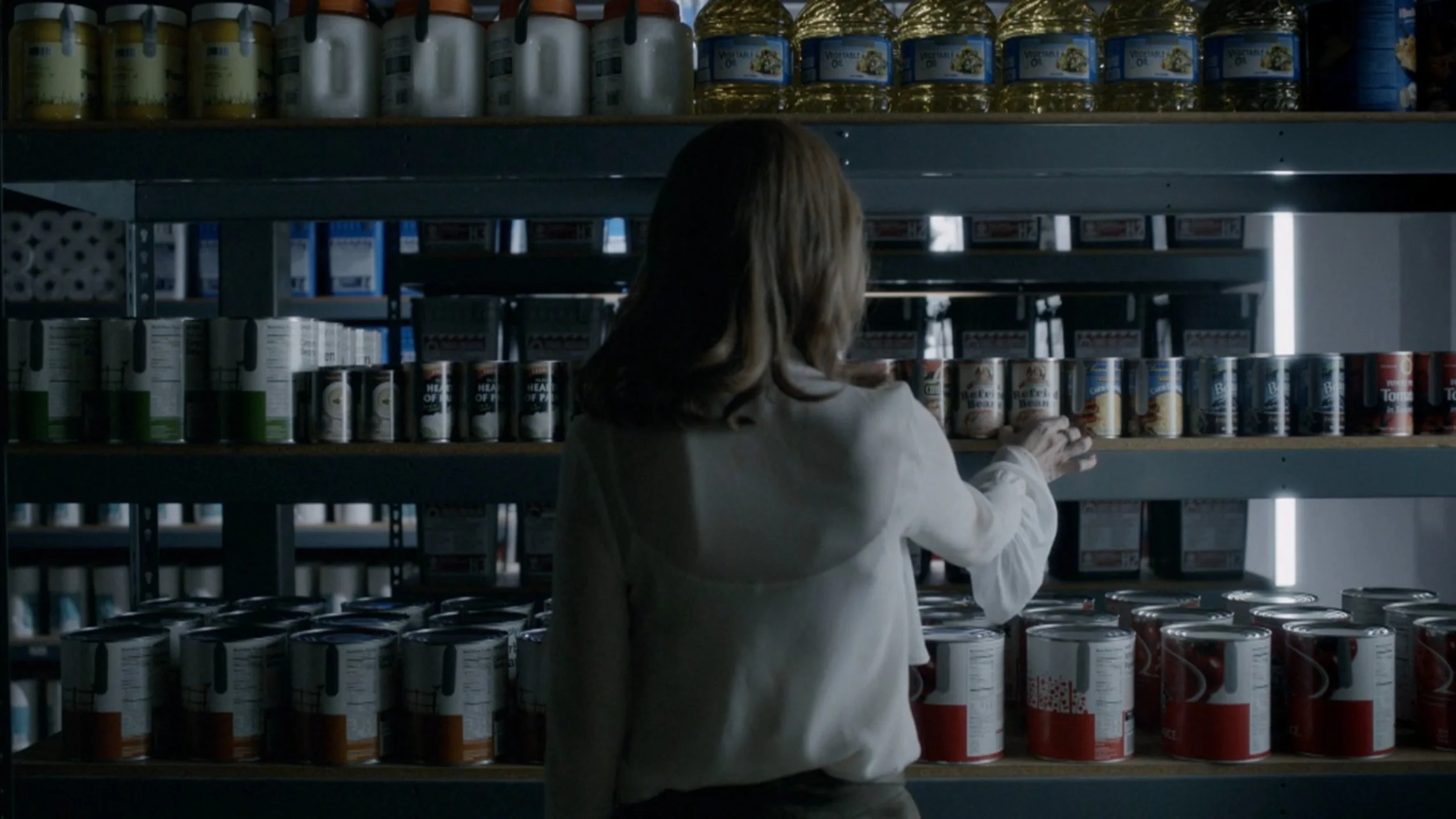
Last Man on Earth, Fox Entertainment, 2015.
Confidence is required to host a charity auction at the exact moment the world begins to end, and Pamela Brinton has it.
She stands before a room of the wealthy and the vaguely philanthropic, smiling the smile of a woman who believes the worst thing that can happen at a gala is a guest with a competing foundation. Dogs have been saved. Souls have been fed. A joke lands somewhere between polite laughter and social obligation. Someone coughs blood into the evening. The auction continues, because what else is there to do but proceed when money, like hand sanitizer, might fix this.
Pamela does not panic, not at first. Panic is for people without staff, without systems, without a voice assistant named Alana who can deliver headlines like a slightly concerned concierge. The virus is framed as inconvenient, then suspicious, then frankly a little rude. Presidents begin dropping in a neat, escalating sequence, like dominos arranged by a bored god with a sense of irony. Her housekeeper dies via text message. Still, Pamela remains convinced that somewhere, someone has a solution. After all, that is what wealth is for: insulation, deferral, the promise that consequences will arrive later, or perhaps not at all.
But consequences are nothing if not punctual. Husband Benjamin coughs. Doors close. Love becomes theoretical, something you offer in the form of soup you will never make but will, importantly, feel. Pamela is expelled from her own life with the same brisk politeness she once used to dismiss a waiter, and suddenly the bunker, once the punchline to someone else’s paranoia, is the only place left that will have her.
Inside, the bunker is a catalog of contingencies: canned food (like refried beans), simulated landscapes, a drone that promises perspective but delivers mostly confusion. Pamela explores it the way one tours a vacation home they did not choose, commenting, judging, attempting to retrofit her expectations onto a reality that refuses to match. There are deserts and prairies and a Sphinx that appears on screen when summoned, because if the world is ending, it may as well do so with options.
Time, previously measured in events and invitations, flattens into repetition. Holidays are performed. Music plays. Costumes are worn. The rituals of a life continue without the life itself, like a stage set that has forgotten its actors. Jeremy, the dog, becomes less a companion than an audience that must eventually speak back. “Milk,” Pamela insists at Jeremy, as if language itself can be reverse-engineered through sheer will. It is not enough to survive; something must acknowledge her survival and dogs can’t talk.
Years pass, though “pass” suggests movement and there is very little of that here. Pamela’s optimism does not so much fade as calcify into something harder, sharper. She bargains with Jeremy, insults him, threatens exile, as if the dog’s failure to speak is a personal betrayal rather than a perfectly reasonable boundary. When he finally leaves, it is a correction: the world will not perform for you, even at the end of it.
Alone, truly alone now, Pamela turns to the drone, the one device that can still reach beyond the bunker’s polite suffocation. It lifts, it glides, it offers her the impossible: other people. Not scientists in lab coats, not officials with answers, but a group of survivors sitting in the sun, holding signs, being unmistakably, conveniently alive. Pamela becomes electric again, a current of language and identity surging back through her. She introduces herself in English, in French, in the universal dialect of someone who has not spoken to another human in years and is suddenly overwhelmed by the possibility of being heard.
The battery dies.
Of course it does. The drone returns, then fails, because hope in this universe is always slightly undercharged. And yet, for the first time since the auction, Pamela does something that is not performance, not control, not containment. She leaves. The bunker, with all its careful provisions and curated illusions, is abandoned in favor of something riskier: other people, who may or may not want her, who may or may not survive her, who will certainly not say “milk” on command.
And so Pamela Brinton steps back into a world that has no interest in her foundation, her jokes, or her metrics for goodness. The souls, it turns out, were never stuffed. They were just waiting for someone to admit that being alive, even badly, even without a script, is the only thing left to bid on.
Make it!Homemade Refried Beans from Tastes Better From Scratch