

Upside Down Flint-Rubble Bubble Cake
S1 E25: In the Dough
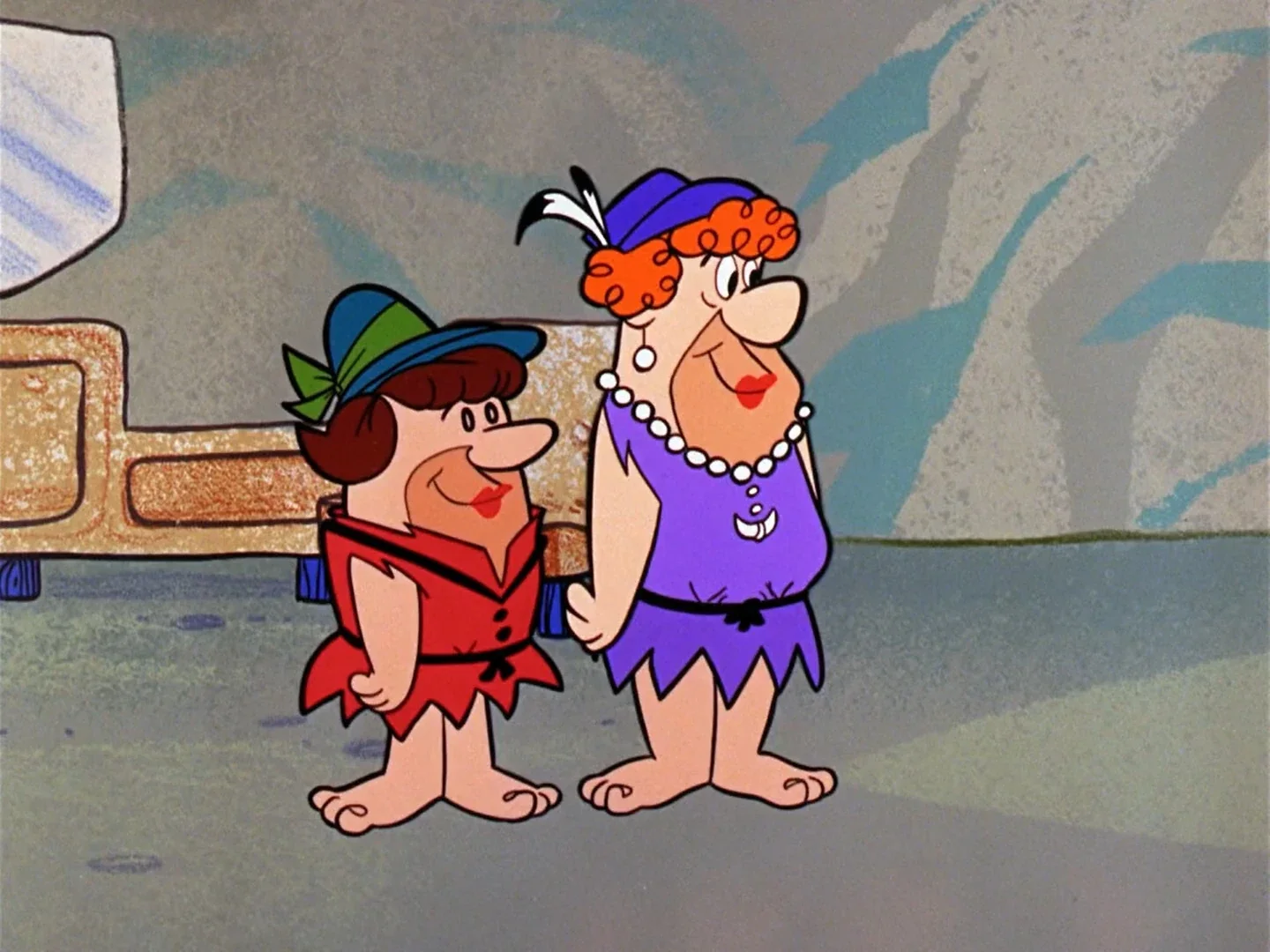
The Flintstones, Warner Bros. Entertainment, 1966
There was a time when television believed the greatest threat to a household was not war, or recession, or the slow collapse of civic institutions, but flour.
Specifically: the wrong flour.
“In the Dough” begins, as many domestic catastrophes do, with optimism. Wilma and Betty have entered a baking contest sponsored by Tasty Pastry Flour, a corporation whose primary business appears to be turning housewives into televised gladiators. Their creation, an Upside Down Flint-Rubble Bubble Cake, earns them a spot in the finals and the possibility of $10,000, a sum large enough to destabilize any Stone Age marriage.
Then the women get measles.
This should end the story. Illness, quarantine, rest, recovery. But Fred Flintstone has already spent the prize money in his head. He has mentally purchased leisure, status, and possibly a second television made of rocks. And so he does what any responsible husband would do: he and Barney steal their wives’ identities.
The episode’s central image is two large men in wigs and dresses boarding a corporate aeroplane, their disguise consisting mainly of optimism and the hope that no one looks too closely at their ankles. The judges do not. This is Bedrock, where gender is a hairstyle and confidence is a credential.
What follows is one of television’s earliest explorations of a timeless question:
Can you successfully impersonate your spouse on live television if you follow her recipe exactly but fundamentally misunderstand every principle of attention, humility, and brand loyalty?
The answer is: almost.
Fred and Barney perform well. They mix, they bake, they endure the quiet horror of being publicly evaluated by a flour company. Victory appears imminent. The cake wins.
And then Barney, seized by a sudden and catastrophic impulse toward honesty, announces that he used a competing brand’s flour.
This is the moment the episode reveals its true moral universe. Not that deception is wrong. Not that impersonation is misguided. Not even that two grown men entering a national baking competition under false identities is troubling.
The sin is brand betrayal.
They are immediately disqualified. Fred removes his wig in anger, revealing not only his identity but also the entire structural fragility of corporate loyalty in a televised economy. Security escorts them out. Somewhere, a marketing executive breathes easier.
Back home, Wilma and Betty—who have watched the entire disaster unfold on television while recovering from measles—receive their husbands the way history receives most bold financial strategies: silently.
“In the Dough” is less about baking than about ambition. About the uniquely American belief that money is just one scheme away. That competence is transferable. That if you want something badly enough, you can put on a dress, get on a plane, and win a televised corporate competition without reading the rules.
It is also about marriage, in the Bedrock sense: a system in which husbands create problems and wives survive them.
The cake itself is never the point. The point is the dream attached to it. Ten thousand dollars. A shortcut. A transformation delivered by sugar and luck and the willingness to improvise.
In the end, the lesson is simple and enduring:
Follow the recipe.
Respect the sponsor.
And never, under any circumstances, tell the truth about the flour.