

Chili
S1 E4: Witch Day
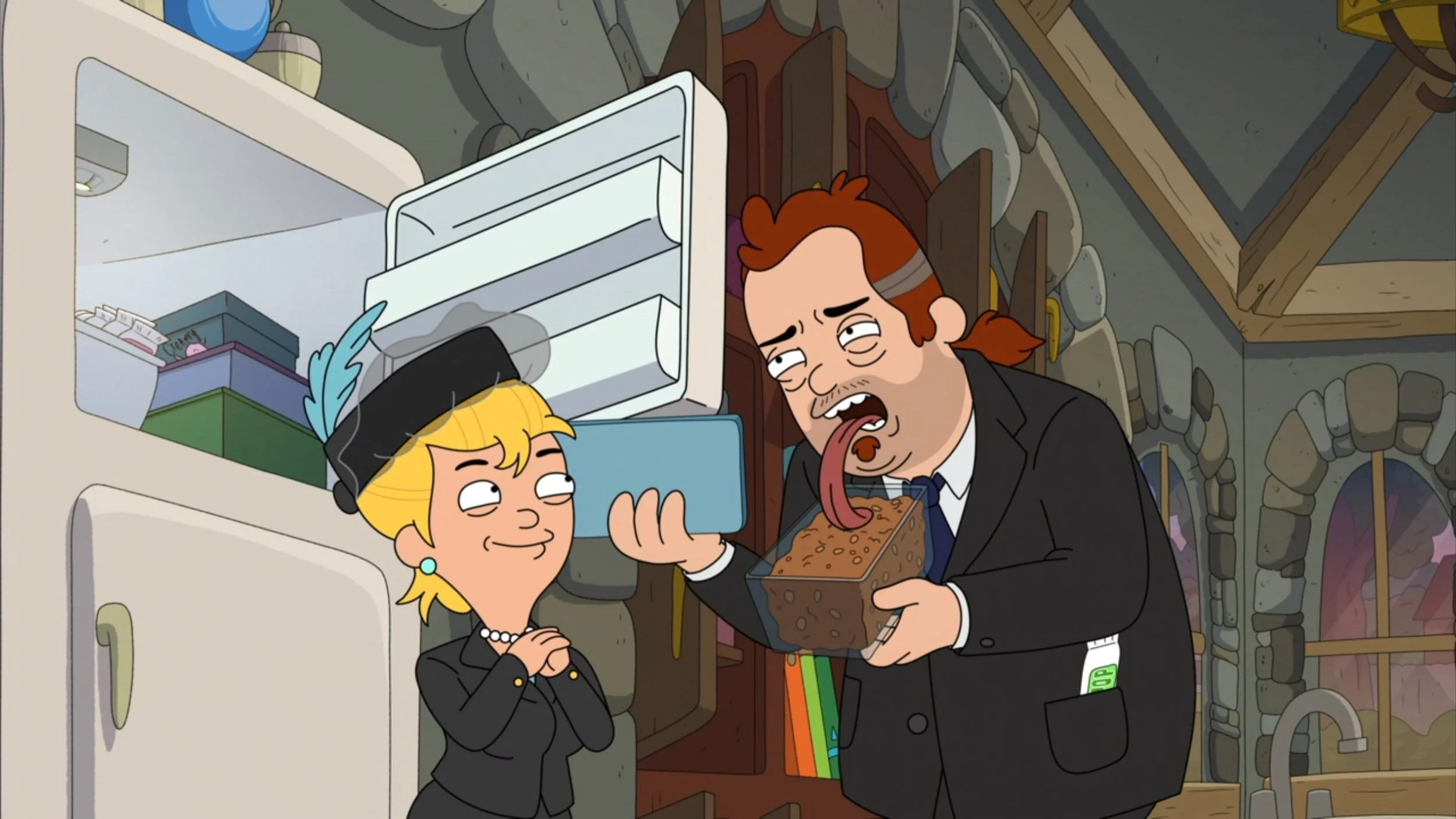
Duncanville, Fox Entertainment, 2020.
Oakdale treats Witch Day the way some towns treat parades or pie contests: as a perfectly normal reason to build a giant effigy, collect everyone’s worst thoughts on slips of paper, and assign a teenage boy to set the whole thing on fire while the crowd chants about his sexual history.
It’s civic pride with a hint of menace, equal parts pageantry and public shaming, and everyone is having a terrific time except Duncan, who has just been volunteered (by his own mother, no less) as the town virgin, a role that comes with prestige, visibility, and the immediate desire to leave town forever. Mia, newly arrived and equipped with historical context, points out that the holiday is rooted in persecution and fear, which the town receives the way it receives most new information: briefly, and then not at all.
Elsewhere, Annie and Jack hear that their chili-ruling neighbor has died and respond with urgency typically reserved for emergencies or limited-time sales. They attend the mourning period with a clear objective: locate the recipe, secure the legacy, win the trophy, and in the process uncover evidence that Mrs. Martin may have been cooking something far more sinister than beans and beef. This is acknowledged, filed away, and ultimately deemed irrelevant to the larger goal of improving their chili. They pivot to ingredient sleuthing, enlisting their daughter’s truffle-detecting abilities and, at one point, a pig, because nothing says wholesome family endeavor like reverse-engineering a dead woman’s signature dish in the woods.
The festival begins to wobble the moment its central prop disappears. Without the witch, there is no ceremony; without the ceremony, there is no outlet; and without an outlet, the town’s enthusiasm curdles into something sharper. Duncan and his friends, briefly imagining themselves as founders of a new society in hiding, are quickly dragged back into the fold, where tradition waits, impatient and louder than ever. It’s only when Duncan threatens to read the collected secrets aloud, transforming a private ritual into a public reckoning—that the crowd recalibrates. Suddenly, anonymity becomes precious, and the same people who came to burn away their guilt would very much like to keep it.
What follows is not so much a resolution as a reshuffling of priorities. The witch is optional, the festival remains, and an information booth appears as a compromise no one fully understands but everyone is willing to tolerate if it means the rides stay open. Duncan steps away from the pyre with most of his dignity intact, Annie and Jack take home the chili trophy after using their entry to douse their son, and Mia concedes that even flawed traditions can be fun if you squint and maybe add signage. Oakdale continues on, a little more informed, not particularly changed, and already gearing up to do it all again next year, just with better chili.
Make it! Truffle Beef Chili from Truff