

S17 E19: Jambalaya
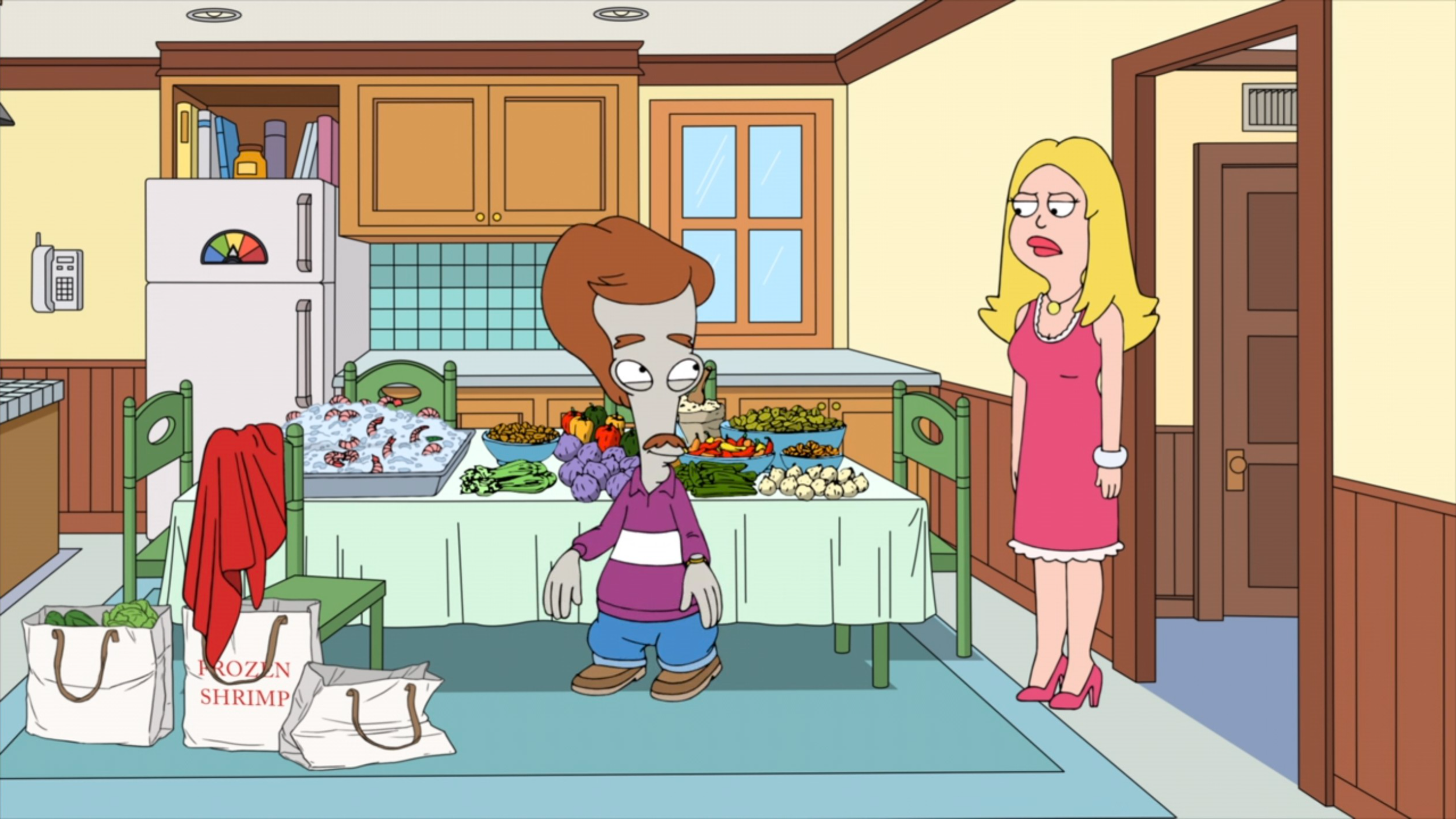
American Dad, 20th Century Animation, 2005.
Francine grows vegetables. Roger tries to make jambalaya. By the end of the episode, there is a restaurant in the living room and an alligator named Julius is the emotional center of a small business.
Francine’s victory is modest but hard-won: after years of plant-related failure, she manages to grow actual vegetables. The goal that follows is equally modest. She wants one good, restaurant-quality dish made from something she raised herself. This is the kind of domestic success that usually leads to a simple dinner and maybe a photo taken in good light. Instead, Roger hears the word restaurant and treats it as a business plan.
He insists he once learned an authentic Louisiana jambalaya recipe from a blind bayou man during a Mardi Gras incident that began with heavy drinking and ended with a raccoon-related misunderstanding. The only problem is that he no longer remembers the recipe. His solution is to return himself to the exact level of intoxication he was experiencing at the time he originally learned it. The method works. The memory returns. Francine’s garden does not survive the process.
At this point, the reasonable outcome would be replacement vegetables and an apology. Roger instead replaces the garden with inventory, installs a bayou-style porch where the plants used to be, and opens a full-service restaurant in the living room. During prep, a frozen alligator is discovered in a shrimp shipment, thawed, revived, and immediately promoted to mascot and namesake. His name is Julius. He is repeatedly described as extremely soft.
The restaurant opens to surprising success. The jambalaya is plentiful, the branding is aggressive, and diners are encouraged to meet Julius in person, which they do, cautiously. When a stranger offers to buy the alligator for unspecified “good purposes,” Roger refuses on principle. The man suggests he can be found at the large, ominous animal-wallet factory on the edge of town, which feels like information no one should need later but absolutely will.
Meanwhile, the rest of the household spins into its own orbit of bad decisions: Stan and Hayley road-trip to meet a minor social media personality and refuse to leave her home after a minor accident, while Steve and Klaus write an action script for John Cena that grows increasingly ambitious and structurally unsound. Francine, newly unemployed from a job she never asked for at a restaurant she never wanted, briefly decides that Roger should experience the emotional consequences of losing something he loves. This decision results in Julius being handed off to the same wallet-factory representative, who, as it turns out, is less interested in leather goods than in running a large-scale cocaine operation.
The resulting rescue attempt unfolds with very little planning and a surprising amount of accuracy to Steve and Klaus’s script, culminating in John Cena himself arriving, neutralizing the criminals, and revealing that Julius is actually his long-lost pet alligator from a previous research trip. The reunion is immediate and heartfelt. Within minutes, Cena and Julius have also adapted Steve and Klaus’s screenplay into a feature film without their involvement.
Back at home, the restaurant disappears as quickly as it arrived, and Francine replants her garden. The crisis resolves in the way most American Dad crises do: nothing is restored to its original state, but everyone agrees to behave as though it has been.
Through all of this, the jambalaya remains the only stable element. It feeds customers, funds construction, stains important documents, and indirectly attracts the attention of a major action star. In a house where projects tend to expand until they collapse under their own ambition, the dish itself does exactly what it’s supposed to do: it brings everything together, holds heat, and somehow survives the chaos around it.