

S4 E1: Season 4
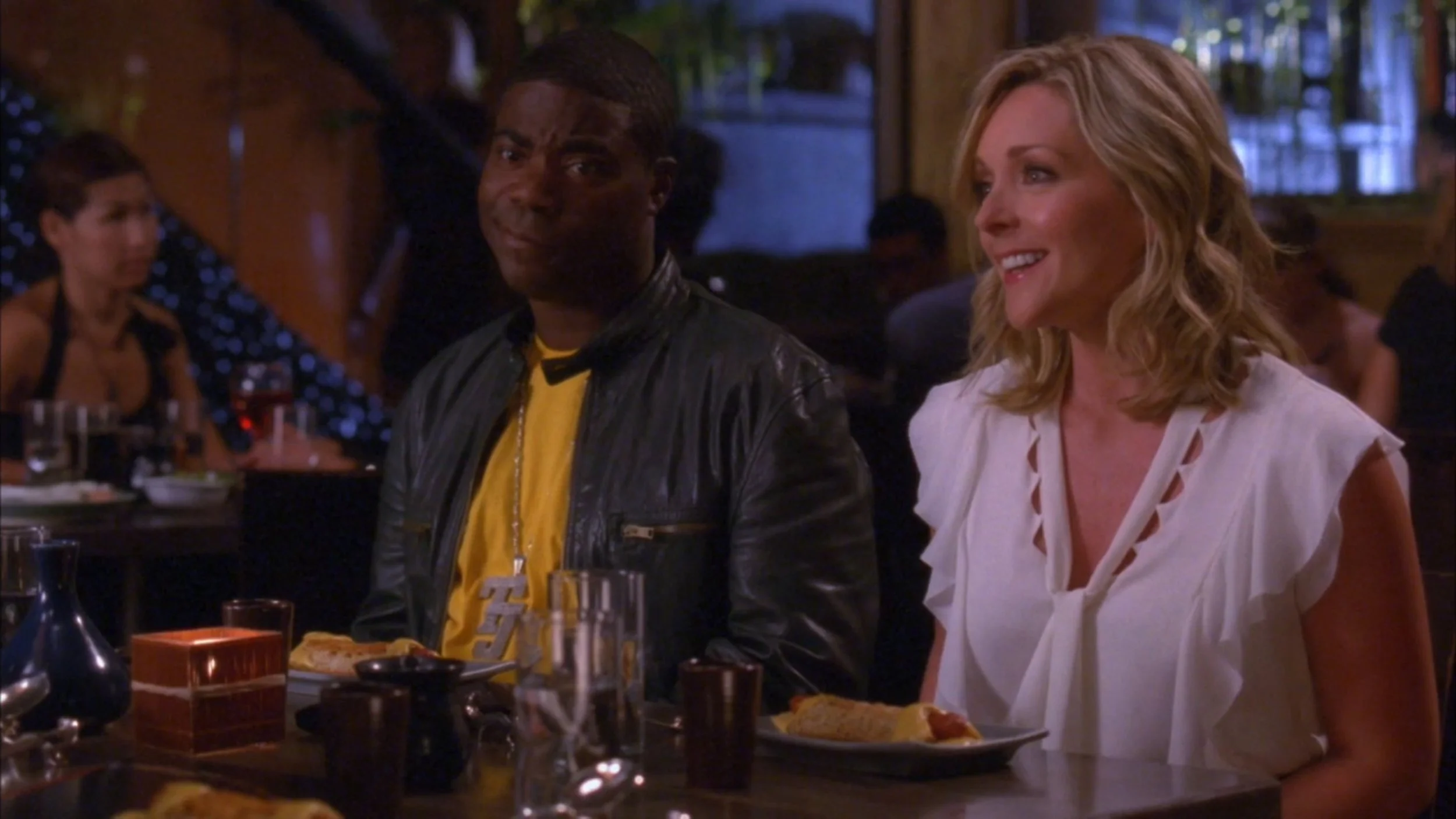
30 Rock, NBCUniversal, 2006.
Jack Donaghy gathers the TGS team at a restaurant called Season 4. Moments later, the plates arrive, and with them, the future of network television: the Cheesy Blaster.
Jack’s argument is simple: the economy is collapsing because elites have lost touch with the heartland. And the people most out of touch with America are, apparently, the cast and writers of a late-night sketch show who are currently (except for Liz) refusing to eat a hot dog wrapped in a pizza.
The Cheesy Blaster is not meant to be enjoyed. It is meant to be understood.
Liz immediately understands it as a problem.
From that moment forward, the episode becomes a series of attempts to reconnect with “real America,” a place defined primarily by country music, tennis promotions that mention beer repeatedly, and the belief that subtlety is a coastal weakness. Jenna agrees to “go country,” which mostly means singing aggressively about trucks and sports. Tracy attempts to reconnect with ordinary people by speaking to a custodian like he is conducting field research. Liz is assigned the most terrifying task of all: find a new cast member who tests well outside cities, but do it secretly, because actors react to job insecurity the way raccoons react to flash photography.
Meanwhile, the true labor story of the episode unfolds downstairs, where Kenneth Parcell discovers that the recession has eliminated overtime for NBC pages. When he accidentally receives Jack’s enormous bonus check instead of his own paycheck, the moral math becomes difficult to ignore. Jack calls the money “extremely American.” Kenneth calls a strike.
It is, fittingly, the most polite strike in television history.
“What do we want?”
“To get you sandwiches.”
“When do we want it?”
“Whenever would be convenient for you.”
The movement grows anyway. Other unions join. Bucket drummers arrive. Tracy briefly attempts to rediscover his roots by wandering Manhattan asking strangers to hold hands with a millionaire. Steve Buscemi appears as a private detective whose primary undercover qualification is his “big wet eyes.” At one point, Jack attempts to end the strike using Nixon as a strategy framework.
Eventually, the strike ends the only way it can: Jack signs a piece of paper admitting he is “a big ol’ liar,” restoring Kenneth’s moral order and allowing NBC to resume functioning as a place where no one is happy but everyone is technically employed.
The larger problems remain. The economy is still uncertain. The show is still anxious about its audience. The definition of “real America” is still being assembled from focus groups and snack foods.
But somewhere in Rockefeller Center, tucked away in an office, Liz Lemon is holding a folded pizza containing a cheese-stuffed hot dog, and for a moment, she is connected to the heartland, not through culture or empathy, but through the shared national experience of eating something that should not exist and continuing anyway.
Thanks, Meat Cat.