

 Image 1 of 1
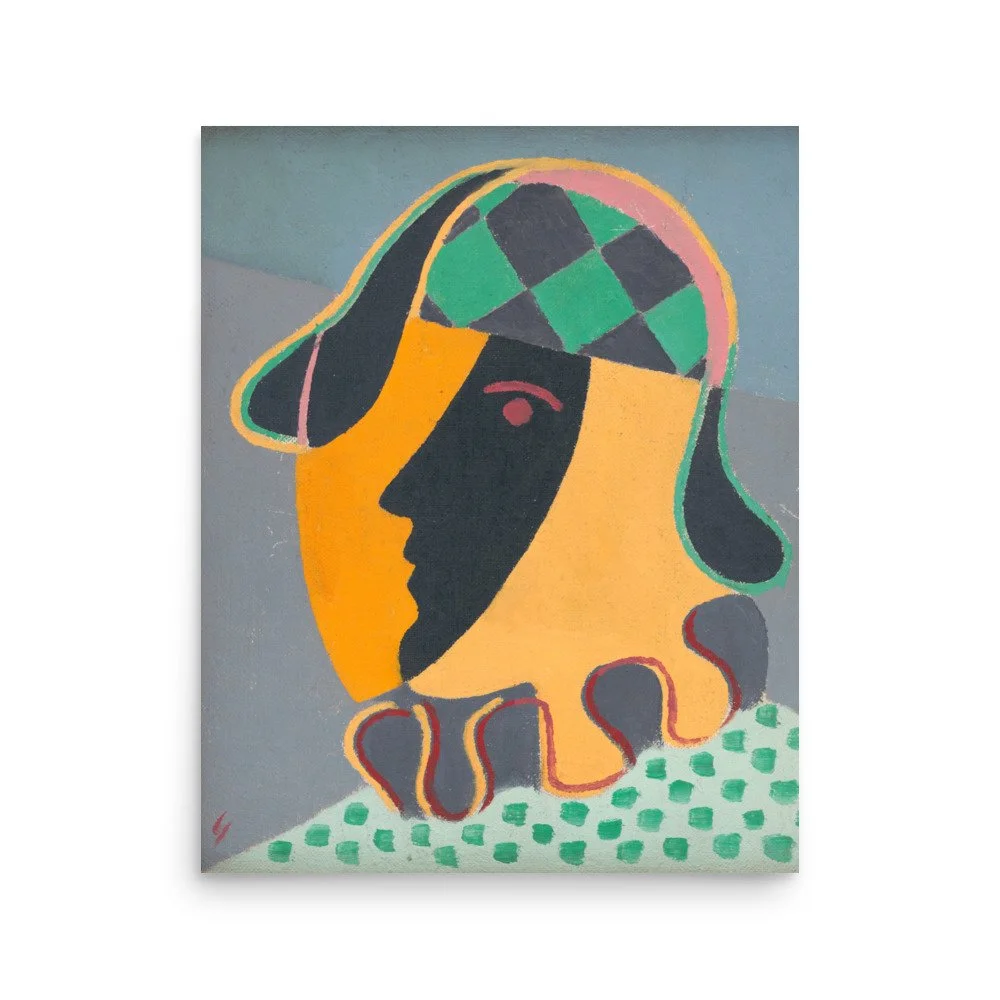
In 1932, Slovak modernist Mikuláš Galanda flattened a clown into bold color, clean shapes, and a mask that reads like a tragic mime and a design system.
The result is a piece that feels equally at home in a museum or leaning against the counter at Saved by the Bell's The Max waiting for a chocolate shake. He’s groovy. He’s tubular. He’s existential, but approachable.
Part commedia dell’arte, part accidental fast-food mascot, this is modern art doing what modern art does best: turning the mundane into something graphic, friendly, and suspiciously brand-ready.
• 16" x 20"
• Paper thickness: 10.3 mil
• Paper weight: 189 g/m²
• Opacity: 94%
• ISO brightness: 104%
• Paper is sourced from Japan
In 1932, Slovak modernist Mikuláš Galanda flattened a clown into bold color, clean shapes, and a mask that reads like a tragic mime and a design system.
The result is a piece that feels equally at home in a museum or leaning against the counter at Saved by the Bell's The Max waiting for a chocolate shake. He’s groovy. He’s tubular. He’s existential, but approachable.
Part commedia dell’arte, part accidental fast-food mascot, this is modern art doing what modern art does best: turning the mundane into something graphic, friendly, and suspiciously brand-ready.
• 16" x 20"
• Paper thickness: 10.3 mil
• Paper weight: 189 g/m²
• Opacity: 94%
• ISO brightness: 104%
• Paper is sourced from Japan