

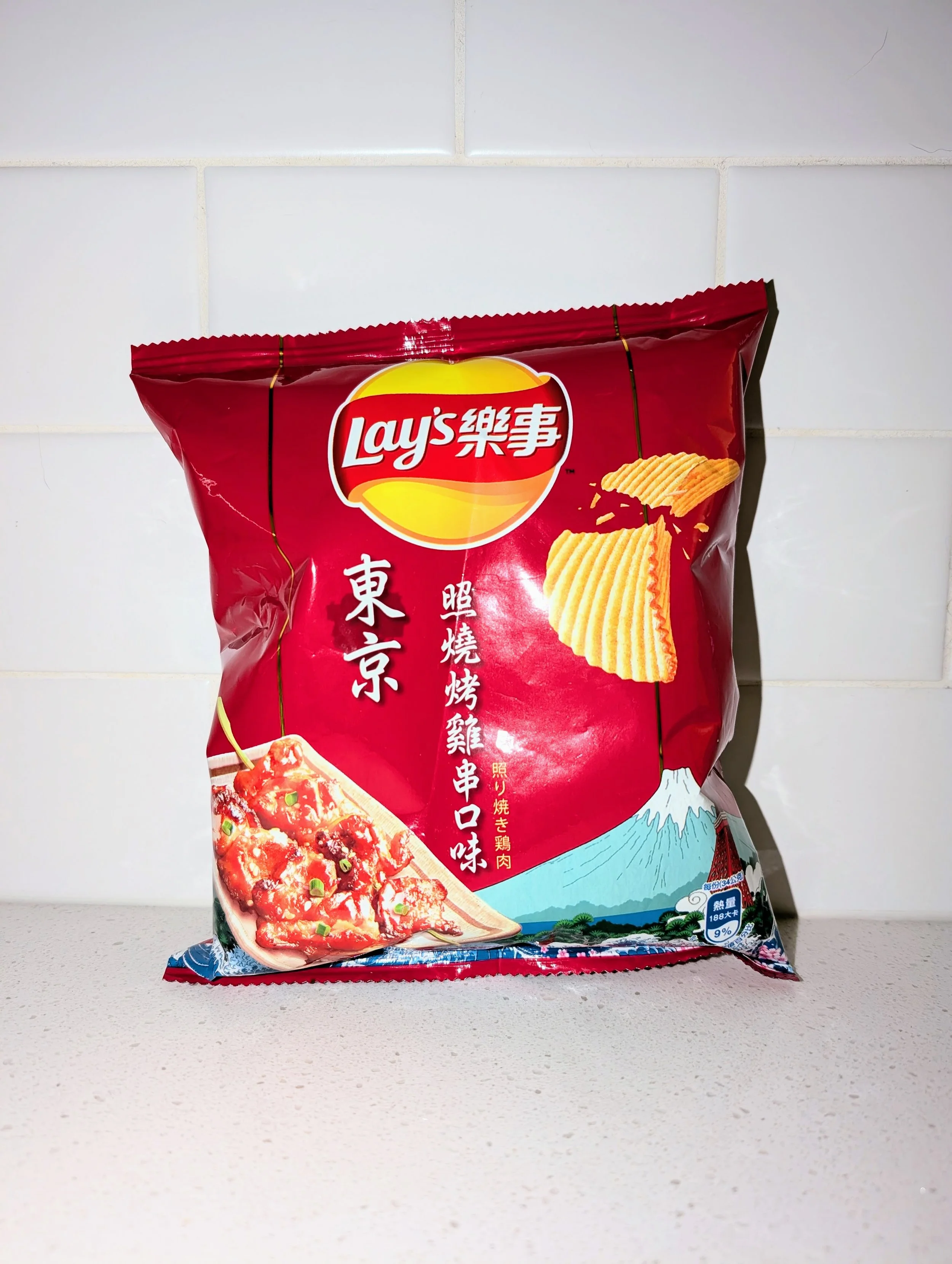
Yakitori is a rotating cast of textures, cuts, and smoke, unified by charcoal and sauce.
The Snack
Lay’s arrived in Asia in the 1990s. China came first in 1993, India shortly after in 1995, and within a few years the brand had achieved something remarkable: it stopped behaving like an American export and started acting like a local snack company that just happened to be very good at logistics.
This is PepsiCo’s favorite trick. Instead of insisting that the world eat sour cream and onion forever, Lay’s treats each market as an opportunity for culinary improvisation. In China you might encounter Sichuan hot pot chips. In Japan, nori or teriyaki. In India, masala. Sometimes the flavors stay local; sometimes they travel.
Which is how we arrive, via Taiwan, at Tokyo yakitori.
Yakitori is less a single dish than a whole philosophy of skewered meats. Traditionally cooked over charcoal and brushed with tare, a glossy sauce made from soy sauce, mirin, sake, and sugar, it occupies the comfortable middle ground between street food and ritual. It’s casual but precise.
There’s negima, the classic pairing of thigh meat and scallion. Tsukune, chicken meatballs often glazed with tare and sometimes dipped in egg. Kawa, grilled chicken skin that turns crisp and smoky. Reba, the liver skewer, rich and iron-heavy. Hatsu, the heart, chewy and deeply savory.
In other words, yakitori is not one flavor. It’s a rotating cast of textures, cuts, and smoke, unified by charcoal and sauce.
Turning that into a potato chip is ambitious, but Lay’s has spent three decades proving that the potato chip is an excellent vehicle for culinary impersonation.
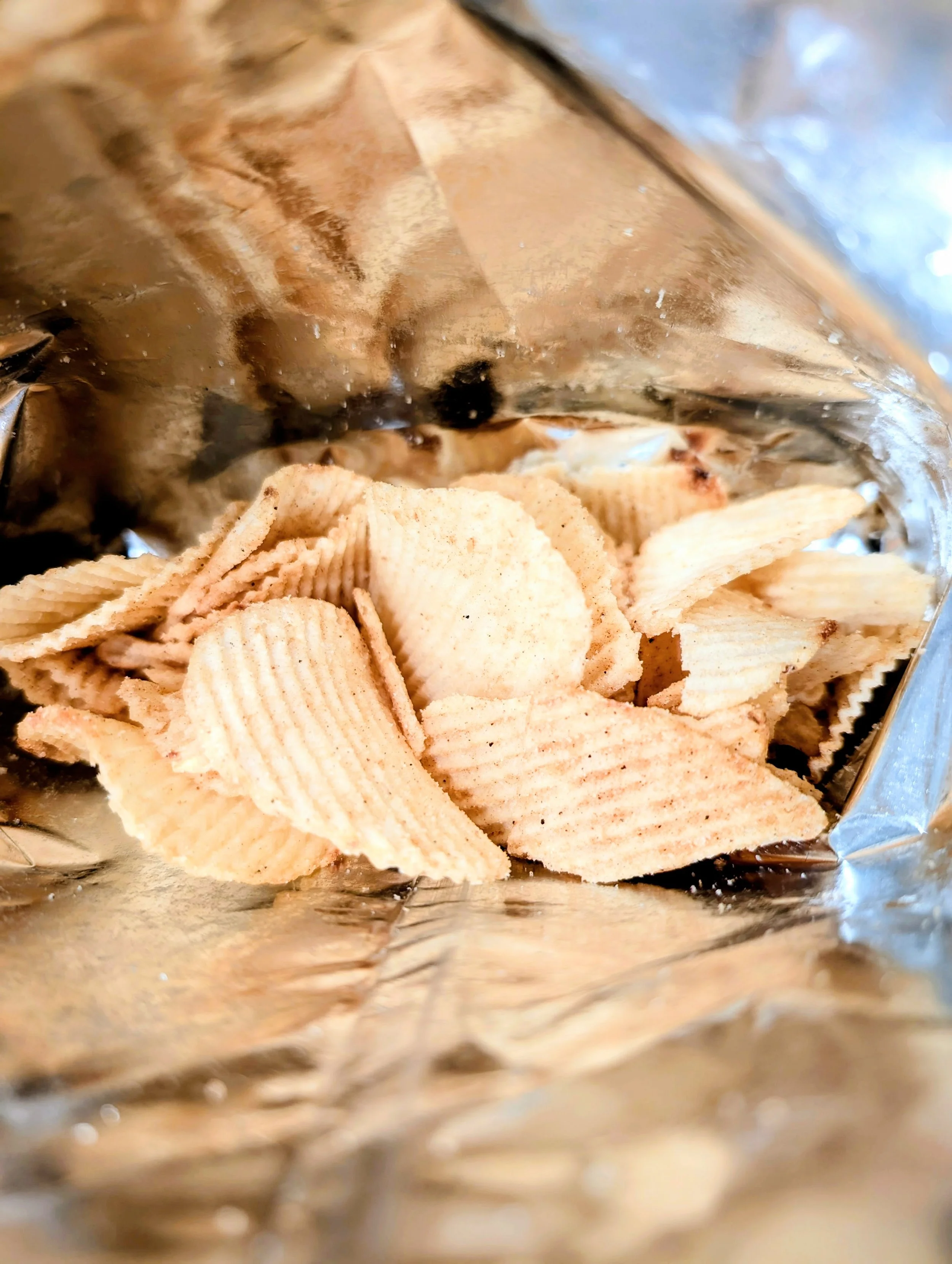
Ridges give seasoning somewhere to live, and this particular seasoning arrives enthusiastically.
The Review
The bag opens with an immediate promise of grilled meat.
The chips themselves are ruffled, which is a strategic decision. Ridges give seasoning somewhere to live, and this particular seasoning arrives enthusiastically. The first taste is smoky and salty, the unmistakable suggestion of charred chicken skin just lifted off a grill.
Then the sweetness appears.
Not candy sweetness, something closer to the caramelized edge of tare sauce. Soy, sugar, and smoke all colliding in a way that feels suspiciously accurate for a potato chip pretending to be a skewer of meat.
What’s surprising is how meaty the flavor actually is. There’s a definite grilled chicken note at the beginning, almost like the smell of a yakitori stand drifting down a Tokyo alley at night. It starts savory and smoky, then gradually tilts sweet as the chip dissolves.
The progression is oddly convincing.
To an American palate, the closest comparison might be barbecue chips, but the balance is slightly different. Barbecue flavors tend to lean into vinegar or tomato tang; these lean into soy and caramelized glaze.
By the third or fourth chip, the sweetness becomes the dominant note, but the smoky opening keeps things interesting. Each chip begins as grilled meat and ends as something closer to glaze.
Which, if you think about it, is exactly what yakitori is doing too.