

Apple Turnovers
S1 E7: AAMCO
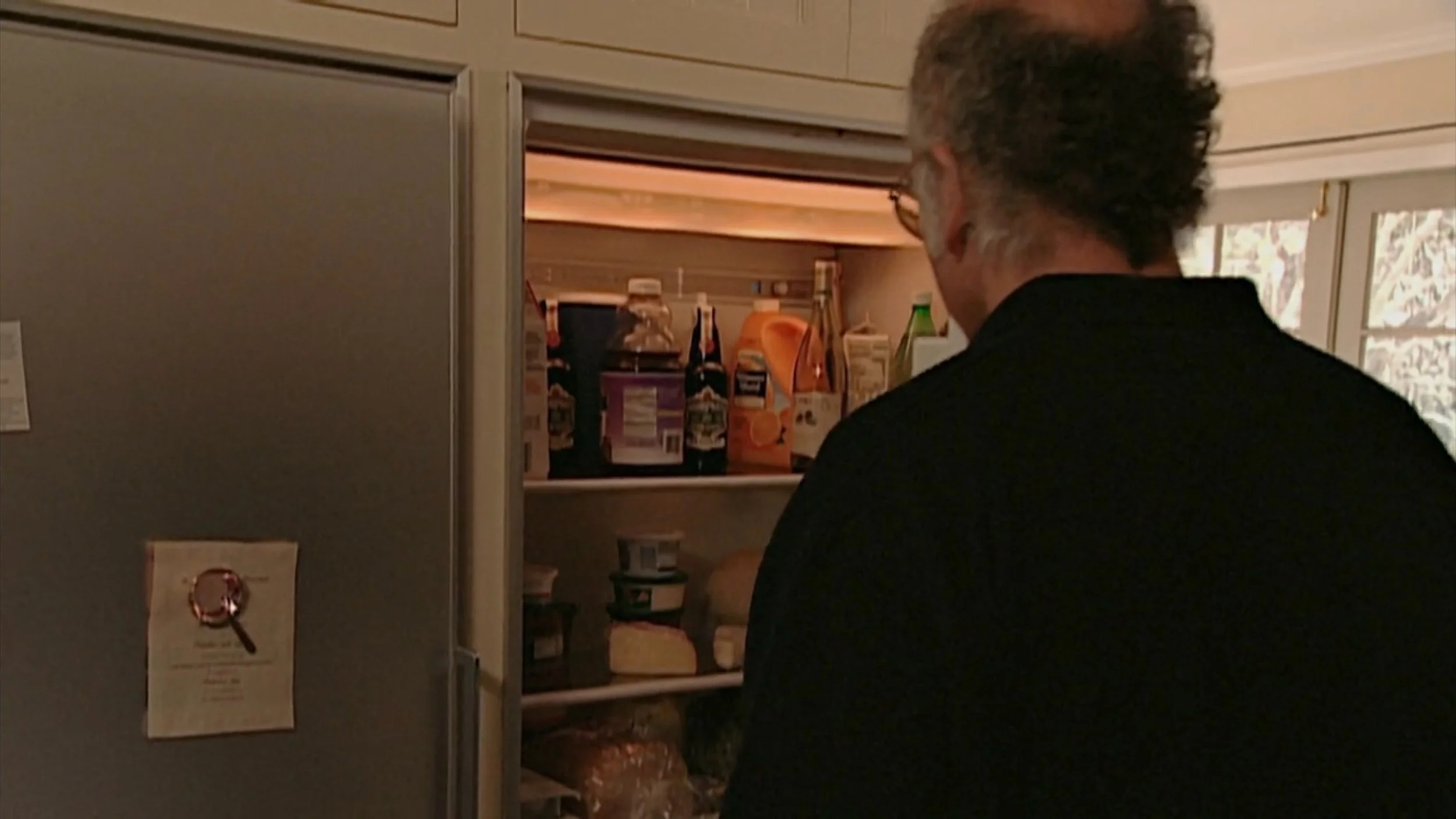
Curb Your Enthusiasm, HBO Entertainment, 2000.
The trouble with nostalgia is that it often comes with chrome.
In Season 1, Episode 7 of Curb Your Enthusiasm, Jeff Greene acquires a 1957 Chevy convertible, which he presents not so much as a car but as an emotional obligation. Larry’s initial failure to congratulate him is treated with the gravity usually reserved for births and minor coronations. To repair this breach, Jeff insists Larry drive the vehicle immediately, because nothing restores friendship like placing it in mortal danger.
The car is, objectively speaking, magnificent. It gleams with the confidence of a machine that believes itself to be the main character. Larry is given the wheel. The radio is turned on. The universe clears its throat.
From the speakers comes the unmistakable honk of an AAMCO commercial. Larry interprets this as a real human grievance. He turns around and begins yelling at the driver behind him, who, understandably moved by Larry’s performance, responds by ramming the Chevy and fleeing. The transmission begins making sounds that suggest both mechanical failure and karmic bookkeeping.
This incident would be enough for most evenings, but Larry and Cheryl are also hosting a dinner party, an event Larry regards as a prolonged social endurance test disguised as hospitality. The original caterer has canceled for “personal reasons,” a phrase so powerful it cannot be challenged. Jeff recommends his neighbor, a woman whose cooking is reportedly excellent and whose relationship with boundaries will soon become a subject of study.
Guests arrive. Conversations happen in clusters that resemble abstract sculpture. Someone says grace. Someone else takes Larry’s seat with the casual confidence of a man who knows he possesses a rare skill set involving antique transmissions. This man, it turns out, works for AAMCO. Larry attempts to describe the accident. The mechanic laughs at what he assumes is a well-crafted joke, then stops laughing when he realizes it is a documentary.
Hope flickers. The car can be saved.
The dinner itself proceeds with ceremonial cheerfulness. People toast friendship. They discuss office relocations with the intensity of battlefield strategy. Larry performs the subtle gymnastics required to remain polite while also visibly not enjoying himself. Somewhere on the table, radiant, sits a platter of apple turnovers — golden, flaky, the kind of pastry that promises a tomorrow worth waking up for.
Tomorrow arrives. The turnovers are gone.
Not misplaced. Not hidden. Gone in the definitive sense.
An investigation begins. Refrigerators are opened with increasing hostility. Cheryl contacts the caterer, who admits she removed the leftovers because no one explicitly forbade her from doing so. This interpretation of consent is bold. Larry is dispatched to retrieve what remains of the meal, only to discover that the caterer has already redistributed it with philanthropic enthusiasm: some food donated to a homeless shelter, some delivered to Jeff, and some apparently sacrificed to the gods of portion control.
Jeff, when confronted, confirms he has eaten the apple turnovers. He praises them. He does not apologize.
Meanwhile, the AAMCO mechanic leaves a message at dawn explaining he feels “weird” about something that happened at the party. This vague emotional communiqué destabilizes Larry far more than the collision ever did. He spends the day replaying every interaction like a surveillance tape of his own personality. Did he offend the man? Was it about Martha’s Vineyard? Was it about the chair? Is there a secret etiquette surrounding clamming?
When they finally speak in the mechanic’s shop, both men attempt apologies that orbit each other without landing. The mechanic is troubled by the idea he may have imposed on Larry socially. Larry is troubled by everything else. The conversation concludes with the uneasy understanding that the transmission will be repaired, but the human condition remains under warranty.
In the closing moments, Larry offers the salvaged catered dishes — chicken à l’orange, seafood salad, soufflé, relics of an evening that refused to die — to a homeless man outside the mission on Fourth Street. He asks, with genuine curiosity, whether the shelter ever serves cuisine of this caliber. The man accepts the food without comment. Hunger, unlike Larry, does not require context.
The vintage Chevy will be fixed. The dinner party will be remembered. The apple turnovers will never return.