

Meatballs
S24 E4: Bringing Up Brady
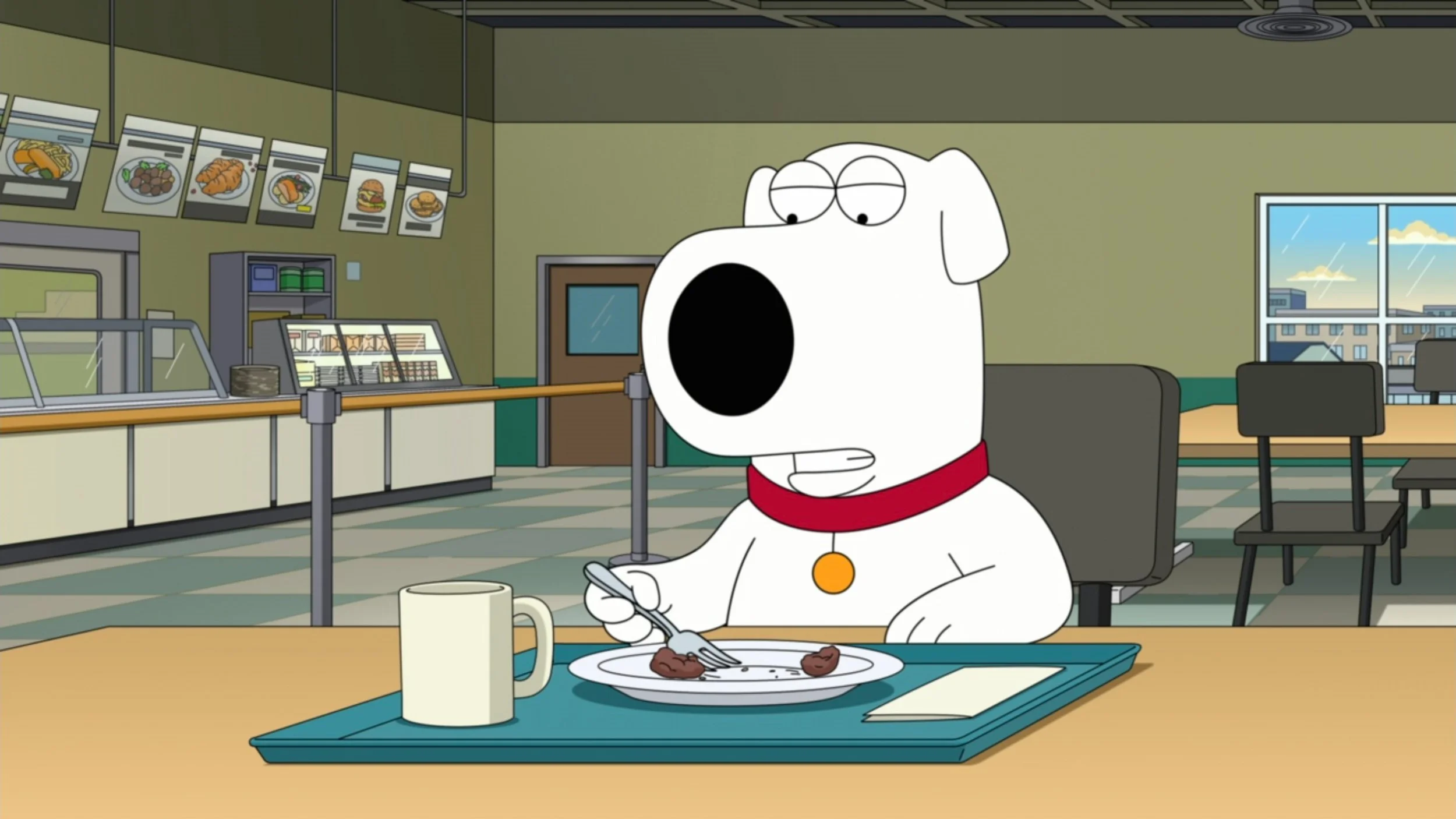
Family Guy, The Walt Disney Company, 1999.
It starts with a crib that includes an ashtray, which answers a question no one asked and raises several others.
Stewie notices immediately. This is not a child who will accept inherited furniture that carries both structural instability and a faint Marlboro legacy. Brian, sensing an opportunity to redirect the meltdown, introduces him to IKEA, a place described with suspicious accuracy as somewhere you go to eat meatballs and argue. The moment they enter, the logic of the outside world dissolves. Arrows take over. Rooms appear fully formed, waiting for occupants who do not technically exist yet.
Stewie clocks the real opportunity almost instantly: you don’t need to buy anything if you simply refuse to leave. Why commit to one bedroom when you can sample all of them, rotating identities like outfits? Brian, won over by the presence of elevated dog bowls and the absence of any landlord, agrees with the kind of confidence that suggests neither of them has thought past the next 12 hours. They settle in. They sleep. They wake up in a different version of themselves, depending on which display they wander into that morning. The store becomes a lifestyle with excellent lighting and no consequences.
The dinner party is inevitable. Stewie decides that if he lives in a mansion, he should act like it, which involves inviting a collection of guests who feel assembled from headlines, half-remembered names, and whatever contact list a baby might maintain. The transformation is mostly visual (cover the sign, dim the lights, speak with conviction) and for a moment, it works. People compliment the layout. They accept the premise. They nod at the idea of multiple kitchens as if this is a normal thing one accumulates, like throw pillows or resentment.
Then the infrastructure begins to assert itself. Toilets that are not connected to anything. Ovens that exist purely as sculptural objects. A meal plan that shifts from game hens to the realization that nothing in the building actually produces heat. Guests start to notice, which leads to a series of decisions that suggest Stewie understands hospitality primarily as crowd control. By the time anyone is asking why there are price tags under the glassware, several attendees have been relocated to storage, where they will remain until the narrative moves on.
Brian, who entered this arrangement hoping for a temporary upgrade, finds himself stuck discussing crypto with a popcorn heir while the illusion collapses in slow motion. The party ends not with a dramatic reveal, but with an agreement that they have already gotten what they needed: a group photo, proof of concept, something to point to and say this happened, even if it didn’t really.
Meg’s storyline runs alongside all of this, orbiting stadiums and commentary booths, but it never quite competes with the spectacle of two characters trying to live inside a showroom. The episode keeps returning to that central idea: that a fully staged life is very convincing until you try to use it. At some point, you need water, heat, or honesty. And none of those are included in the box.