

Chow Mein Noodles
S3 E10: A Christmas Story
Brooklyn 99, 2015.
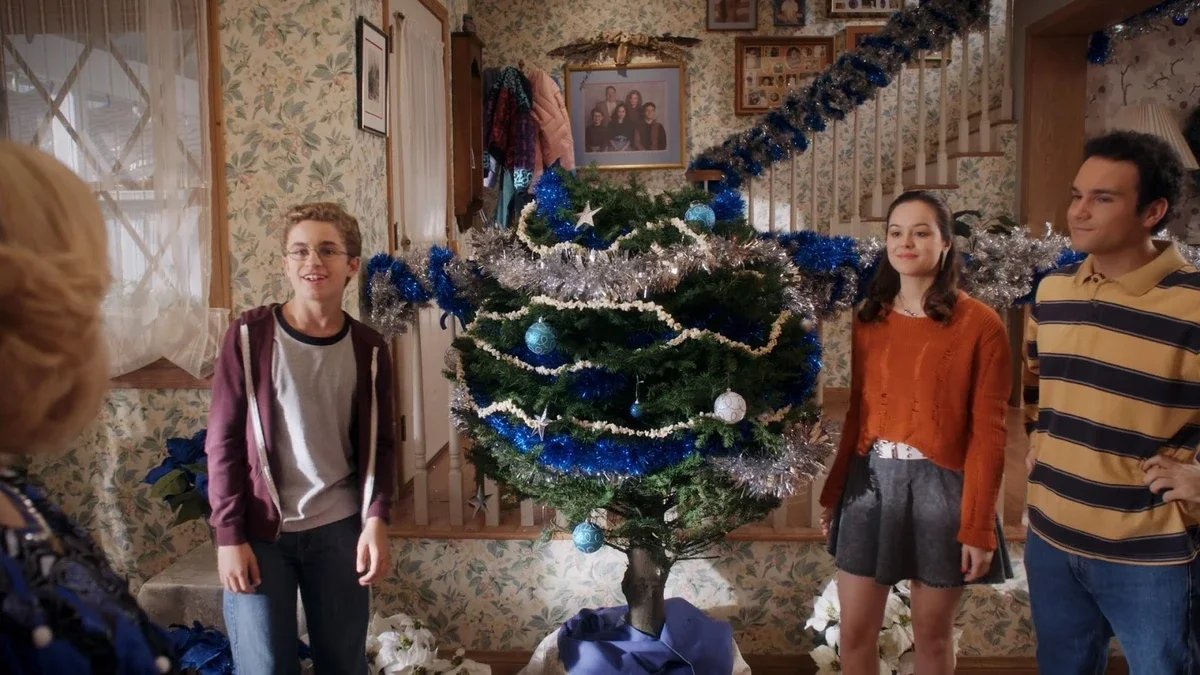
In The Goldbergs episode “A Christmas Story,” the holidays arrive in Jenkintown the way they arrive in most families: with high expectations, poor decisions, and at least one adult in themed knitwear insisting this year will finally be “magical.”
For the Goldbergs, that adult is Beverly, a woman who sees her neighbors, the picture-perfect Kremps’, picture-perfect Christmas and decides the only reasonable response is to invent a new holiday out of sheer willpower: Super Hanukkah.
Super Hanukkah is, to be clear, just Christmas with extra neurosis and a different label. There is a “Hanukkah bush” (absolutely not a thing), stockings rebranded as “Hanukkah socks,” eggnog rebranded as “hanu-nog,” and Neil Diamond crooning Christmas standards because he is “the voice of our people.” Gifts are opened all at once under the bush instead of over eight nights, which technically makes this a bold fusion of liturgical traditions and practically makes it a fire hazard.
Usually, Hanukkah in the Goldberg house is a slow-moving parade of disappointment: shoelaces, batteries, school supplies, and so many underpants that it becomes unclear whether the holiday is about miracles or bulk discount packs. But Super Hanukkah is different. This time the kids get actual, coveted, commercial-grade presents. For a brief, glittering moment, it feels like Beverly has done the impossible: she has made her family good at holidays.
Parallel to this seasonal rebrand, a smaller, pettier war rages in the background: the custody battle over Barry’s time. Winter break has always meant one sacred tradition for Adam and Barry — watching A Christmas Story together and playing their deeply stupid, deeply beloved homegrown sport “ball ball.” Then Lainey, Barry’s extremely cool and extremely present girlfriend, drifts into frame. Suddenly, Barry would rather play ball ball: Lainey Edition, re-favoriting their traditions and leaving Adam alone with a beanbag chair and his spiraling sense of betrayal.
Adam responds the way any younger brother raised on ‘80s movies would: with a triple dog dare. He challenges Barry to stick his tongue to a frozen pole, pulling the nuclear option of playground diplomacy. Barry, constitutionally incapable of backing down from a dare, complies. His tongue sticks. There is screaming. Snow. Regret. And then, in a flawless expression of karmic symmetry, Adam also gets his tongue stuck. Brotherhood is restored through mutual suffering and shared poor judgment.
Back at home, Super Hanukkah reaches critical mass. Pops stages a one-man protest concert with a banjo and a set list of increasingly accusatory holiday songs and the Hanukkah bush combusts (literally and symbolically). Both the bush and Beverly collapse under the weight of their own ornamentation, with Beverly reconciling with her father.
At this point, Beverly steps outside and finds “Ginzy” Kremp collapsing too. Ginzy, the woman whose Christmas has been weaponized in Beverly’s imagination as the platonic ideal of family togetherness, is sitting on her steps unraveling. The dog has knocked over the nog. Someone’s been shot with a BB gun. The ham is ruined. The rugs are ruined. Her “perfect” Christmas, it turns out, has gone straight off the rails.
And in that moment, two suburban moms in their driveways, surrounded by broken traditions and burned meat, it finally clicks. There is no such thing as a flawless holiday. There is only the amount of chaos you’re willing to admit out loud.
So Beverly does the one genuinely simple, generous thing she’s tried all episode. She looks at Ginzy and says, essentially, come with me. No speeches. No rebranding. No Hanukkah bush lore. Just: I know a place.
Cut to the two families, Goldbergs and Kremps, crammed into a Chinese restaurant on Christmas. The table is crowded with spring rolls, orange chicken, steamed broccoli, and, most prominently, the glorious tangle of chow mein noodles. Chopsticks clack, sauce drips, kids trade bites across plates. The glow isn’t from twinkle lights now; it’s from heat lamps and neon and the kind of relief that only kicks in once you’ve stopped pretending the day had to go any other way.
This is the real tradition the Goldbergs have been good at all along: Chinese food on Christmas, shared with whoever needs a place to land. No bush, no stockings, no performative perfection. Just people, shoulder to shoulder, passing noodles and spring rolls and the last piece of orange chicken, laughing about how bad the day almost was and how good it somehow turned out anyway.
In the end, “A Christmas Story” doesn’t say, “Stop trying to be good at family.” It says: being good at family has nothing to do with how your house looks in December and everything to do with who you’re willing to squeeze in around a round table, sharing chow mein, on a day that mattered to them and to you.